
A hallway cluttered with shoes, a coffee table disappearing under mail, a living room where the light grazes the floor without reaching the sofa: we all know that moment when the interior generates more fatigue than it absorbs. Transforming your living space is not just about choosing a trendy color or a graphic cushion.
The real lever is to reduce the mental load that each room imposes daily, by acting on storage, maintenance, noise, and light.
Closed storage and free surfaces for an easy-to-maintain interior
We start with the most concrete constraint: the time spent tidying up and cleaning. An open piece of furniture like a shelf exposes every object to dust and view. As a result, we dust more often and endure a constant visual clutter.
The shift to closed storage radically changes the game. Full-door cabinets, storage benches in the entrance, buffets in the living room: the goal is to reduce the number of visible objects. Decorators and interior architects have observed a growing demand for so-called “low mental load” interiors, where every horizontal surface remains clear.
You can rely on Vivez Décorez’s home guide to identify storage solutions suitable for each room, from the pantry to the children’s bedroom. The idea is not to hide everything but to keep only what is used every day in sight.
- Entrance: a closed shoe cabinet and a coat rack limited to three hooks force sorting and eliminate the pile of jackets on the floor.
- Kitchen: high cabinets up to the ceiling eliminate the wasted space where boxes and unused appliances accumulate.
- Living room: a bookshelf with low doors hides cables, remote controls, and board games while serving as a space divider.
- Bedroom: a headboard with integrated niches replaces the cluttered bedside table.
Scenographic lighting: adjusting the ambiance room by room without repainting
Most decor articles advise to “multiply light sources.” We go further. The real transformation comes from the ability to adapt the color temperature according to the time of day.
Dimmable LED strips and app-controlled smart bulbs allow you to switch from a cold, stimulating light in the morning to a warm, subdued light in the evening. This adjustment alters the perception of the room without touching the walls or furniture.
Three priority areas to address
The kitchen countertop requires direct and clear lighting for meal preparation. The sofa corner of the living room works better with a dimmable lamp placed back, not a central ceiling light. The bedroom benefits from eliminating any source of white light after a certain hour.
The hallway lamp is often underestimated. A motion detector coupled with a LED strip in the baseboard avoids turning on the ceiling light at night, preserving the sleep cycle and reducing the feeling of disruption when getting up.
Noise absorption: a decor lever still underutilized
Noise inside the home, like footsteps on tile, television sounds penetrating walls, and scraping chairs, is a fatigue factor rarely addressed in decor guides. Feedback on this point varies depending on the housing configuration, but a few targeted interventions make a clear difference.
Decorative acoustic panels are mounted on the wall like paintings. Covered with fabric, they absorb reverberations without making it feel like living in a recording studio. They are preferably placed on the wall facing the main noise source.
Textile solutions against everyday noise
Thick curtains, made of velvet or lined linen, serve not only to block light. They reduce resonance in rooms with large bay windows, where sound bounces between the glass and the opposite wall. A low-pile rug under the dining table absorbs the noise of chairs. Felt pads under furniture legs eliminate scraping on the tile.
The accumulation of these small gestures creates a softer sound environment. We are not talking about heavy sound insulation, but about domestic acoustic comfort that reduces nervous tension over the hours.

Soothing color palette: choosing shades for calm, not trend
A “trendy” color is not necessarily a color in which one feels good for eight hours a day. The choice of a soothing palette is based on a simple principle: limit strong contrasts in rest areas.
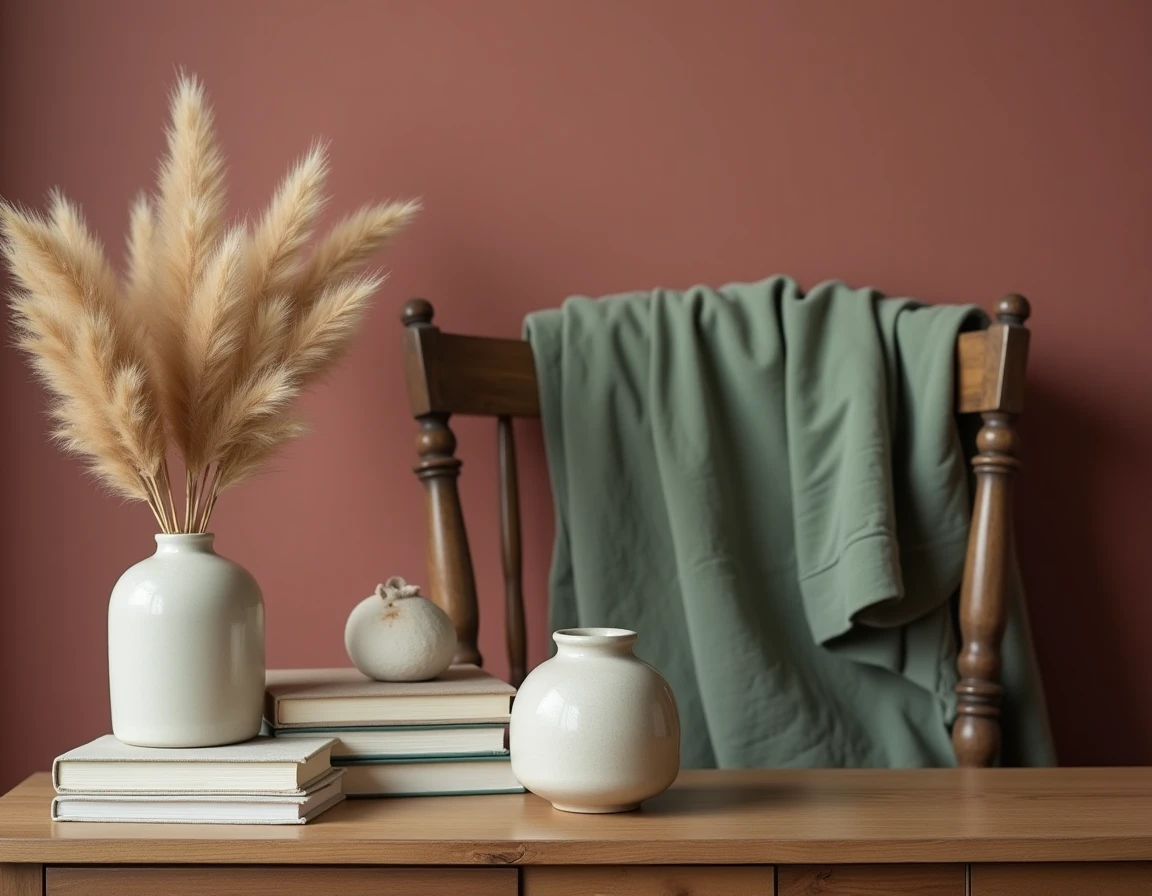
Muted tones (sage green, rosy beige, warm gray) work because they are less tiring on the eyes than saturated colors. Bright shades are reserved for a single accent surface, a wall in the office or the inside of a niche, rather than spreading them across an entire room.
Coherence between rooms to smooth visual flow
When moving from a cold white hallway to a terracotta living room and then to a midnight blue bedroom, the brain adapts to each change in dominant color. By maintaining a common thread, such as the same off-white on the woodwork in all rooms, continuity is created that reduces visual fatigue when moving through the home.
This logic also applies to materials. An identical floor between the living room and hallway eliminates visual disruption and gives the impression of a larger space, even in a modest apartment.
Transforming your interior for better living does not require tearing everything down. Closed storage, adaptive lighting, noise absorption, and a coherent color palette form four concrete axes that directly impact daily comfort. The most effective approach is to tackle one room at a time, starting with the one where you spend the most waking hours.