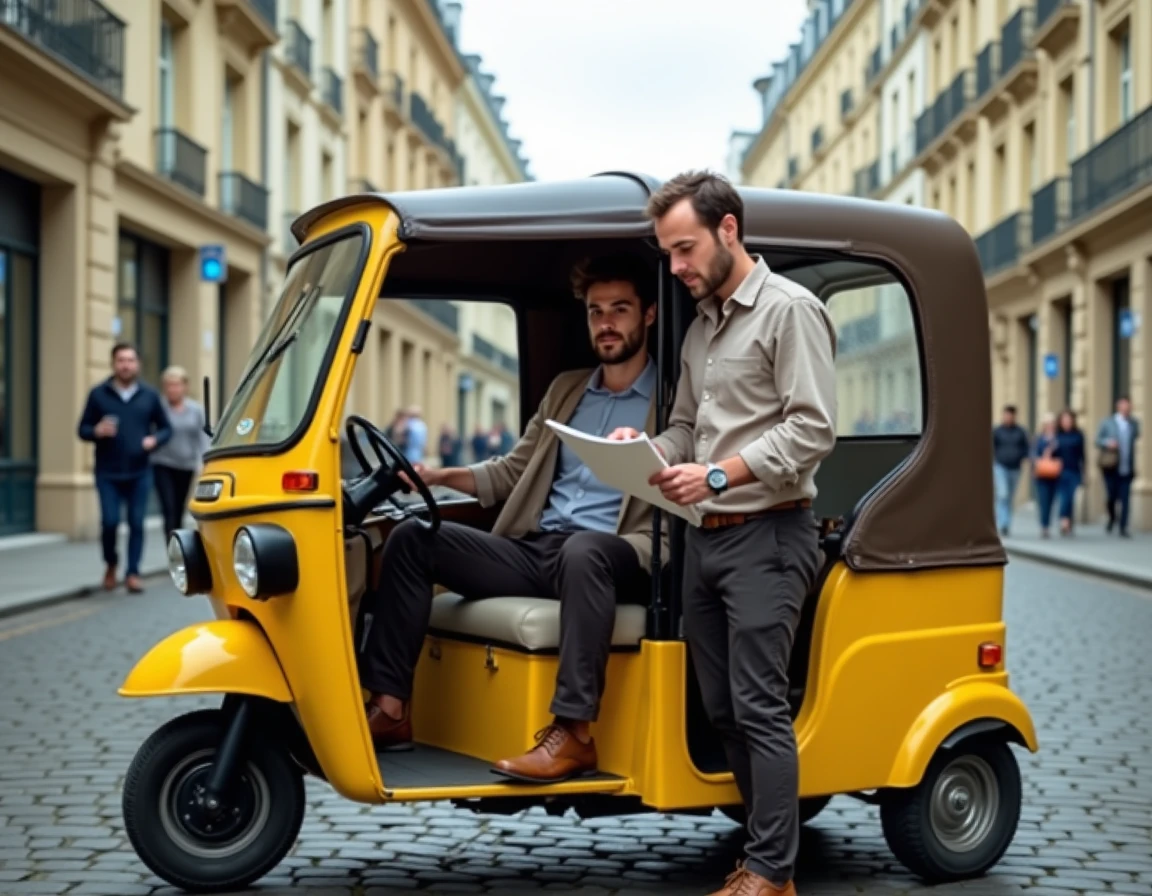
The tuk-tuk operates in France without having its own category in the transport code. This three-wheeled vehicle, often electric, remains linked to regulatory categories designed for other vehicles. Between the L5e classification of motor tricycles and the obligations related to passenger transport, the legal framework imposes constraints that neither operators nor local authorities always understand.
This ambiguity hinders as much as it stimulates a growing sector in tourist areas and pedestrian city centers.
L5e Category and Community Approval: What the Law Really Says
French law does not recognize the tuk-tuk as a standalone vehicle category. In practice, a road-approved tuk-tuk is classified among motor tricycles of category L5e, a family that includes both leisure trikes and light three-wheeled utility vehicles. This classification determines the required license, lighting standards, braking, and passenger safety devices.
The tipping point occurs at the time of importation. A tuk-tuk purchased outside the European Union without community approval (the certificate attesting compliance with European standards) simply cannot be registered. Buying from a distributor who does not provide this document exposes the operator to a refusal of registration, with no simple recourse.
The topic is well documented for those interested in tuk-tuks approved in France from a professional perspective.
For paid passenger transport, the L5e category is not sufficient. The operator must also comply with the regulations for Public Transport of Persons (T3P), the same regulations that govern taxis and VTCs. This means registration in the registry, a prefectural authorization, and specific professional insurance.
Proposed Law in the Senate: Towards an Assimilation with Small Tourist Trains
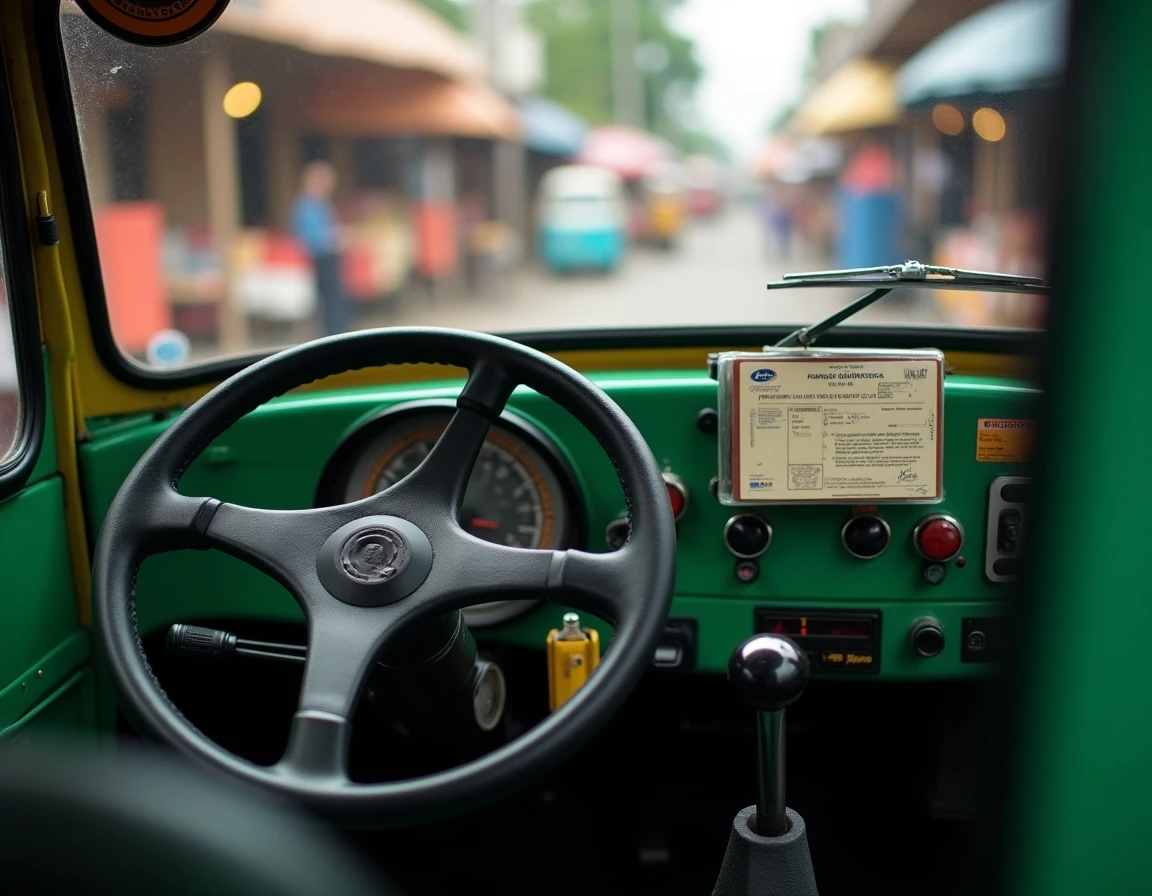
A proposed law submitted to the Senate seeks to break this deadlock by assimilating tuk-tuks, under certain conditions, to small tourist trains. Both types of vehicles transport passengers on short, low-speed routes in a tourist context, justifying a regulatory rapprochement.
If this text comes to fruition, tuk-tuk operators could benefit from a exemption from the constraints related to VMDTR and T3P, provided they meet specific criteria. The vehicle should remain dedicated to tourist use, operate on defined routes, and not exceed a maximum speed.
Field feedback varies on this point. Some operators, particularly those offering on-demand urban rides (and not just tourist circuits), fear that this assimilation will restrict their activity instead of facilitating it. The text indeed only covers tourist transport, leaving aside daily mobility.
Electric Tuk-Tuk and Sustainable Mobility: An Unclear Positioning
The electric tuk-tuk fits into discussions on sustainable mobility, but its place in public policies remains marginal. A few local authorities have integrated these vehicles into their urban mobility plans, mainly for city center shuttles or train station-pedestrian zone connections.
A recent angle concerns the sustainable mobility package. This scheme, accessible to public and private employers, could theoretically cover the use of a registered tuk-tuk classified as light transport. The available data does not confirm that employees are already benefiting from this type of travel, but the question arises as the fleet of electric tuk-tuks grows.
The environmental advantage is real in low-emission zones (LEZ), where an electric tuk-tuk can operate without restriction. However, the limited battery range and the lack of a specialized maintenance network in France pose concrete limits for intensive use.
Criteria That Matter Before a Professional Purchase
- The community approval of the vehicle, the only document that guarantees registration in France and compliance with European safety standards
- The engine power and exact classification (L5e, L2e depending on the number of wheels and engine capacity), which determine the required license for the driver
- The approved passenger capacity, often limited to two or three people, which directly affects the profitability of a transport activity
- The availability of spare parts and after-sales service in France, a recurring weak point for models imported from Southeast Asia

Safety and Insurance: The Gray Areas of the Approved Tuk-Tuk
A category L5e tuk-tuk does not offer the same level of passive protection as a car. No airbags, no programmed deformation structure, sometimes no doors. Professional insurance costs significantly more than for a standard VTC, and some insurers simply refuse to cover this type of vehicle.
Operators who have managed to get insured report variable premiums depending on the regions and companies, with no standardized scale. The lack of statistical data on tuk-tuk accidents in France complicates insurers’ risk assessment.
The issue of passenger safety also arises in discussions between local elected officials and prefectures. In Le Havre, a tourist tuk-tuk activity was suspended, as the legal status of the vehicle posed problems for the authorities. This case illustrates the gap between local enthusiasm and the available regulatory framework.
Financing and Viability of a Tuk-Tuk Project in France
Launching a tuk-tuk business requires an initial investment for the vehicle, approval, insurance, and administrative procedures. The price of a new approved tuk-tuk varies greatly depending on the manufacturer and equipment, but the second-hand market remains narrow in France.
Profitability depends on the chosen business model:
- The fixed-price tourist circuit, which works well in high season but generates little income outside the summer period
- On-demand transport in urban areas, more regular but subject to full T3P obligations
- Event rental (weddings, fairs), a niche market with higher margins but limited volume
The legislative framework currently under discussion in the Senate could alter this balance. If the assimilation to small tourist trains materializes, the entry costs for tourist transport would decrease, but operators aiming for urban transport would remain subject to the current T3P regime.
The approved tuk-tuk in France stands at the crossroads of several logics: tourist mobility, ecological transition, inherited regulatory framework. The proposed Senate law offers a lead, not a definitive answer. Each administrative element (community approval, classification, insurance, T3P authorization) must be verified before any purchase, especially as the ongoing legislative evolution could redefine the conditions of operation.