The coverage of expenses related to a parent’s dependency never relies on a single system. Some family caregivers miss out on major assistance simply because it is conditioned on criteria that are little known or poorly understood, such as income caps or the administrative recognition of caregiver status.
The combination of several public or private supports remains possible, but the access procedures are complex and sometimes discouraging. Unknown systems exist to lighten the financial burden, provided one masters the precise rules and anticipates each step.
When the care costs of a loved one become a real headache
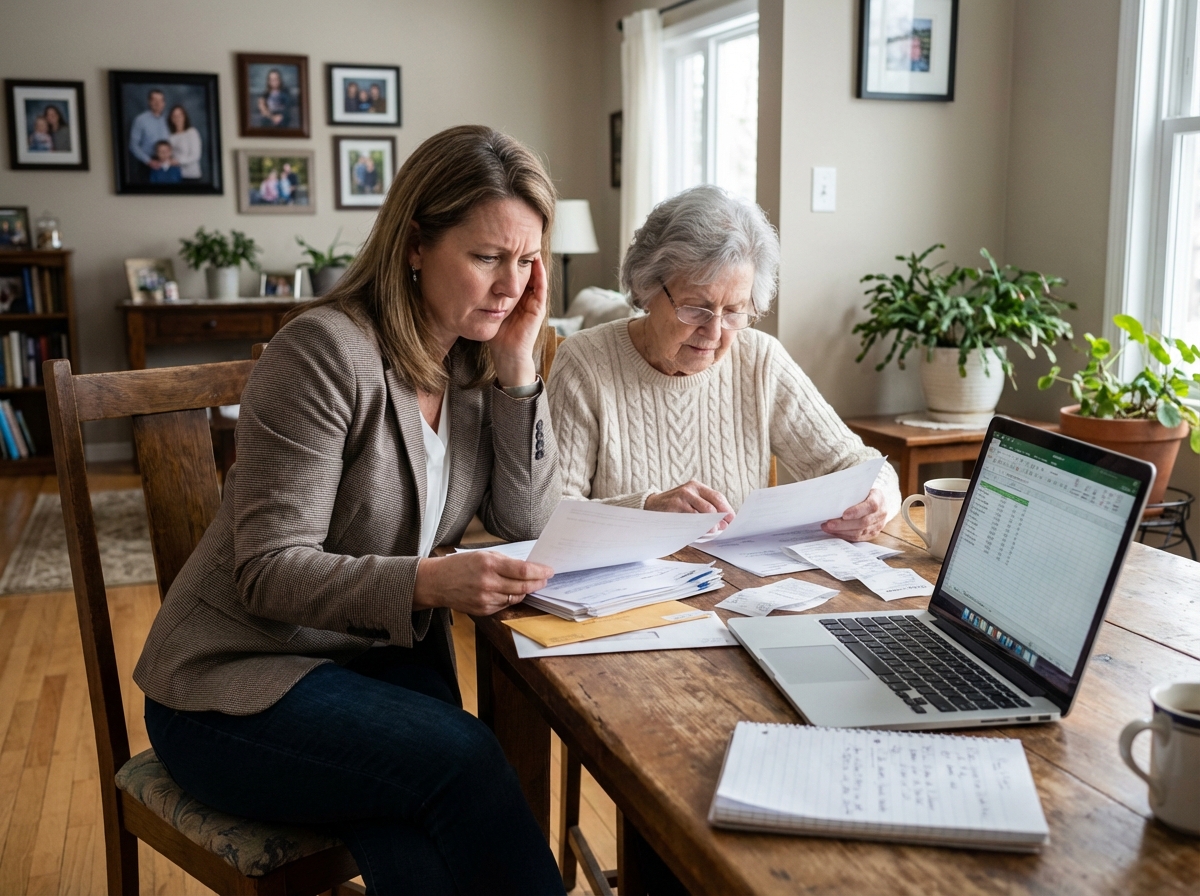
The reality is clear, without detours or filters: caring for an elderly parent confronts every family with a shifting budget equation. Between loss of autonomy, the gradual intensification of needs, and the necessity to adjust support, daily life becomes complicated, constantly imposing new choices. Changes occur in succession, sometimes without warning, forcing a rethink of organization and priorities.
The family caregiver status does not bring the clarity hoped for. Too many relatives are unaware that there are concrete solutions to obtain compensation, conclude a formal contract, or benefit from specific leave to support a parent losing autonomy. The plurality of interlocutors, social services, institutions, social protection organizations, adds to the confusion. Administrative procedures multiply, eating away at the family’s availability and energy.
When the question of institutional accommodation arises, the pressure increases. It is no longer just a matter of finances, but a true societal choice. Navigating between solutions, such as accommodation in ehpad Toulon, requires anticipating, comparing, and questioning one’s needs and those of the concerned parent. Many families feel helpless, caught between income ceilings and the requirement to guarantee respectful care for their loved one’s dignity.
Year after year, the financial burden increases and family balance weakens. Caregivers, driven by unwavering solidarity, demand better clarity of the systems and concrete recognition of their commitment.
What financial assistance exists to support family caregivers?
Dealing with a parent’s dependency involves navigating a maze of financial aids, access to which depends on numerous criteria. The first milestone is often the personalized autonomy allowance (APA), paid by the departmental council. It covers part of the costs related to dependency, both at home and in institutions, taking into account both the degree of dependency (AGGIR grid) and the beneficiary’s resources.
In case of disability, the disability compensation benefit (PCH) takes over for certain expense items. It covers specific needs, whether human or technical, that arise in situations where health disrupts daily life.
If the caregiver interrupts or adjusts their professional activity, they can request a dedicated leave: the caregiver’s leave. Associated with this leave, the daily allowance for caregivers (Ajpa) offers partial compensation for lost income. Furthermore, there is the possibility of formalizing a family caregiver employment contract when the elderly parent employs a family member to assist them.
To better identify the complementary aids to explore, here are measures accessible to many caregivers:
- Tax credit for employing a home employee
- Right to respite for exhausted caregivers
- Social support services to help with paperwork
The rules evolve, the amounts change according to individual situations, which requires staying alert not to miss out on useful support or services. Access to information, often fragmented, proves to be a major lever to lighten this burden that weighs on the shoulders of millions of families.
Explore all solutions to lighten the financial burden on a daily basis
Staying at home when autonomy declines requires flawless organization and regular financial resources. To lighten this weight, every avenue deserves to be explored. Housing aids, such as social housing assistance (ASH), can cover part of the cost of an institution or family accommodation, depending on the resources and situation of the elderly person. Home services, often supported by subsidies, provide valuable support: meal delivery, housekeeping, assistance with daily tasks.
The departmental council plays a central role in guiding and implementing suitable solutions. The personalized autonomy allowance (APA) thus finances the intervention of professionals, from assistance with bathing to social activities, including home care. Communal social action centers sometimes provide complementary aids, less known, that meet specific needs.
To concretely illustrate the available options, here are some solutions to activate:
- Meal delivery: flexible, this service is particularly suitable for isolated individuals or those whose autonomy is decreasing.
- Personal services: home maintenance, administrative procedures, assistance during outings.
- Family caregiver employment contract: formalizing compensation for a relative who invests daily.
In the most fragile situations, departmental social aid can cover part or even all of certain expenses. The articulation of these systems, their combination with the APA, or access to à la carte services, allows for a tailored response to each evolution of the life project and level of dependency. Anticipating, informing oneself, and breaking down barriers in procedures: all steps to lighten the burden and restore space in the relationship with one’s loved one. Because in the end, it is the quality of daily life that makes the difference.