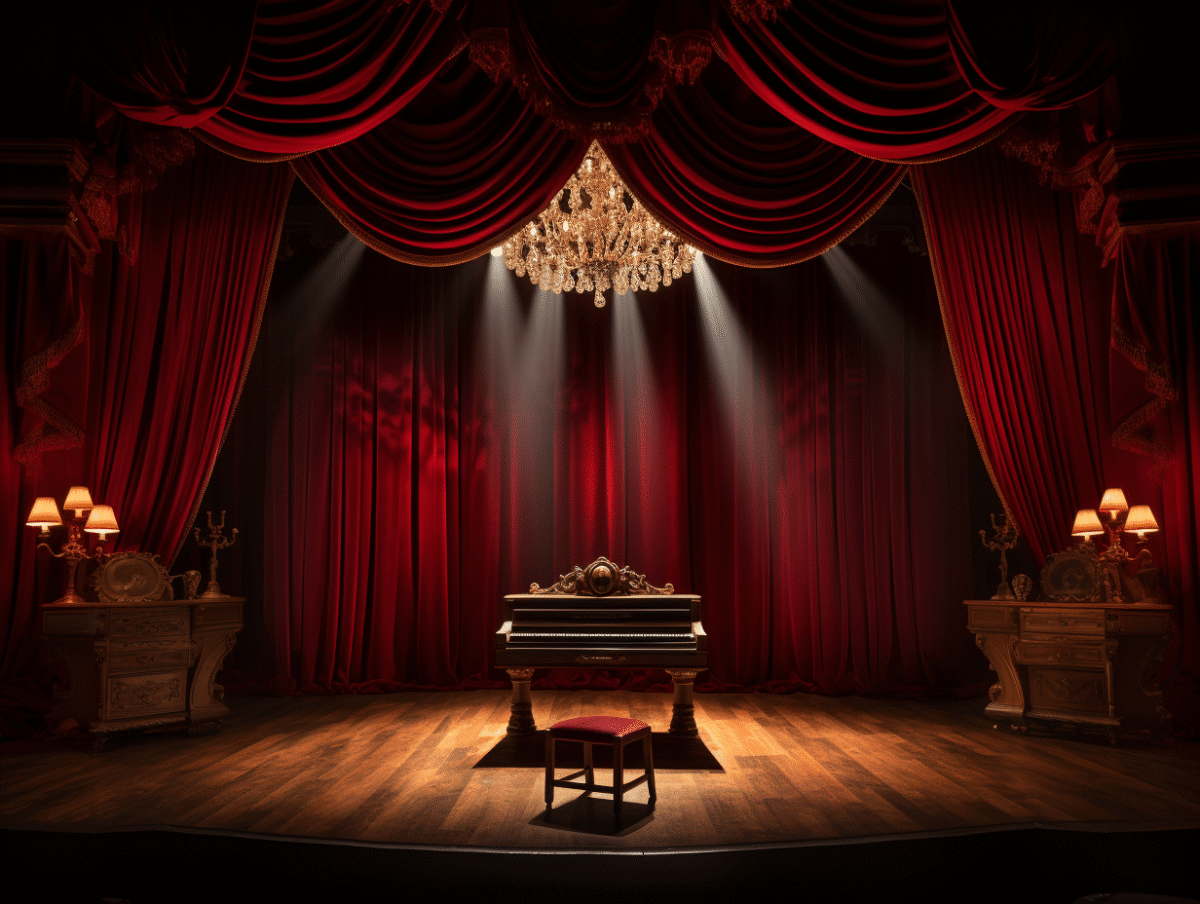
Theater, an ancient art, continues to inspire and move audiences around the world. A true mirror of societies and their evolutions, it stages human passions, moral dilemmas, and great existential questions. Immersing oneself in the theatrical universe means discovering works that have marked history, from ancient Greek tragedy to modern dramas, including the comedies of Shakespeare’s time. It also involves becoming familiar with the authors, those architects of the human soul, who, through their writings, have transcended eras and borders to speak to the universality of our condition.
The foundations of theater: history and evolution
Theater, in its most purist definition, is the art of producing performances on a stage. This history of theater is rooted in ancient rites, particularly during the festivals of Dionysus, where performances were held in honor of the god of wine and revelry. These early steps of theater, where the divine coexisted with the dramatic, laid the groundwork for a tradition that endures.
The etymology of the word theater, derived from the Greek verb ‘theomai’, emphasizes that it is primarily a space dedicated to sight and observation. In this vein, Aristotle established the principles of mimesis and catharsis, fundamental concepts that persist in modern theatrical criticism, including for plays with Kafkaesque qualities.
The rule of three unities, a pillar of classical theater rules, long dominated theatrical creation, imposing a rigorous structure on the work: a unity of time, place, and action. This constraint was meant to reflect reality and structure the narrative coherently, facilitating the identification and catharsis of the spectator.
Theater, as a performance and literary genre, unfolds in the specific space of the theater building. This architecture has evolved over the centuries as you can see on Kafkaiens, adapting its acoustics and visuals to the changing needs of plays and audiences. Discovering the history of theater is therefore essential to grasp the richness and complexity of this art, a reflection of the societies that shape it.
Exploring theater through its authors and essential plays
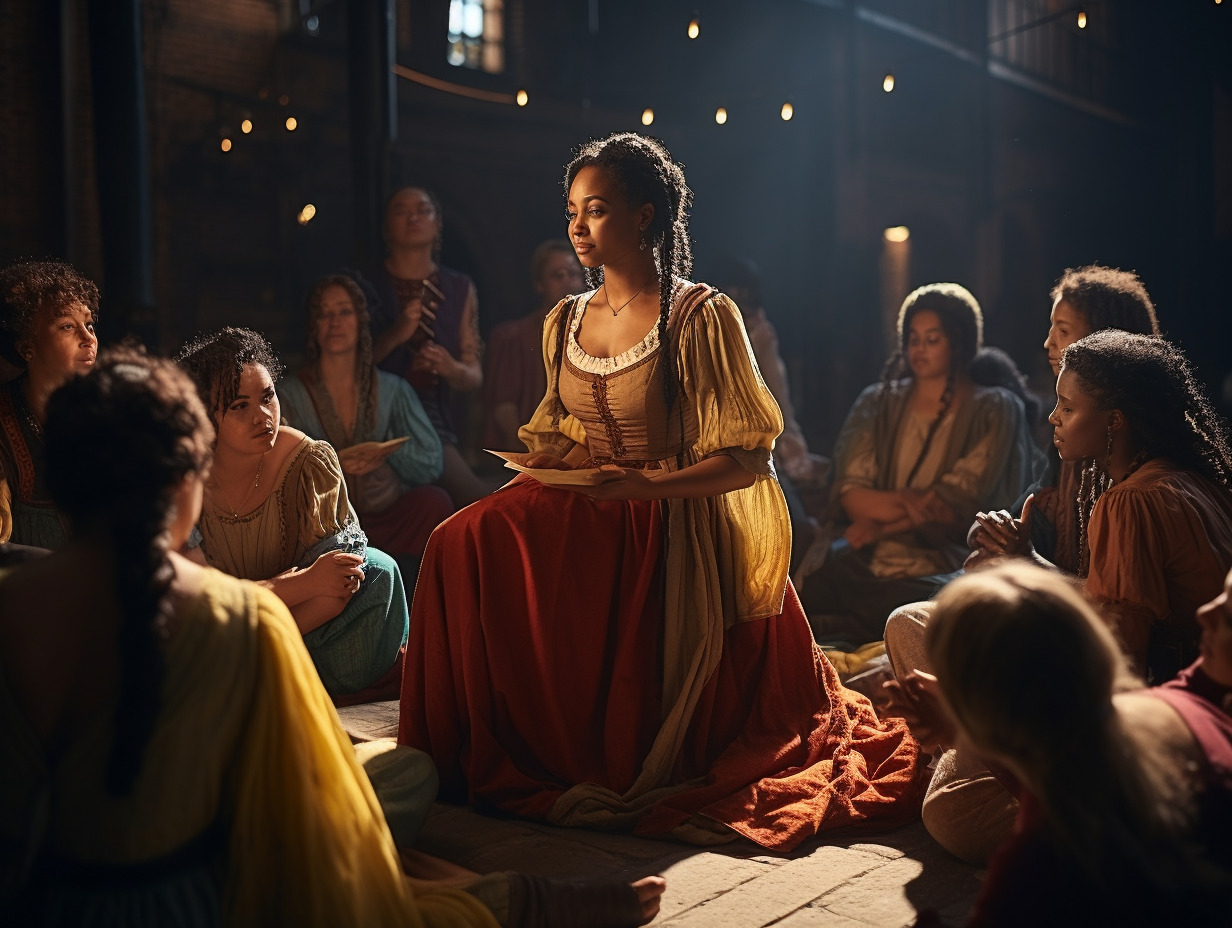
Diving into the theatrical universe requires familiarizing oneself with the authors who have left their mark on this age-old art. Among them, Aeschylus, Sophocles, and Euripides remain the three great masters of ancient tragedy, having laid the foundations of a genre that aims to evoke pity and terror. Aeschylus, with his dramatic force, Sophocles, with works such as ‘Oedipus Rex’ and ‘Antigone’, and Euripides, an explorer of human psychology, all contributed to the richness of tragedy.
Beyond tragedy, comedy stands out, a genre aimed at provoking laughter and critiquing the morals of the time. Comedy, with its often stereotypical characters and lively plots, serves as a necessary counterpoint to the gravity of tragedy, thus offering a complete spectrum of human emotions and reflections. Discovering the various plays of these genres allows for a deeper understanding of the evolution of theatrical art and its social and psychological stakes.
The staging, the art of bringing the text to life on stage, is another essential aspect of theater. It represents the director’s vision, their artistic and technical choices to translate the written work into a living performance. The acts and scenes, in turn, structure the unfolding of the play, while the different types of speech – dialogue, monologue, aside, stichomythia – enrich the text and highlight the relational dynamics between characters. The theatrical space and time, distinct from reality, play with the audience’s perceptions, thereby enhancing the emotional and intellectual impact of the play.