
A thermal string trimmer is distinguished from electric or battery models by its internal combustion engine, powered by a gasoline-oil mixture (2-stroke) or by gasoline alone (4-stroke). This type of engine delivers superior power and autonomy, suitable for large areas or tough grasses that corded models struggle to handle.
2-stroke or 4-stroke engine: what the EU Stage V standard changes
The choice of engine block affects the consumption, noise, and longevity of the device. A 2-stroke engine is lighter, more responsive at startup, but consumes more and emits more pollutants. A 4-stroke engine runs on straight gasoline without pre-mixing, vibrates less, and produces a lower noise level.
Since January 2026, the extension of the EU Stage V standard to lightweight thermal string trimmers requires a reduction in emissions by half compared to previous models. This European directive (EU) 2025/2784 clearly favors 4-stroke engines and hybrid brushless designs, which are gaining ground in independent tests due to better reliability and increased autonomy.
For a medium-sized garden, a Stage V compliant 4-stroke model represents a more sustainable investment. The comparative guides available on coupebordurethermique.fr allow filtering models based on their engine type and regulatory compliance.
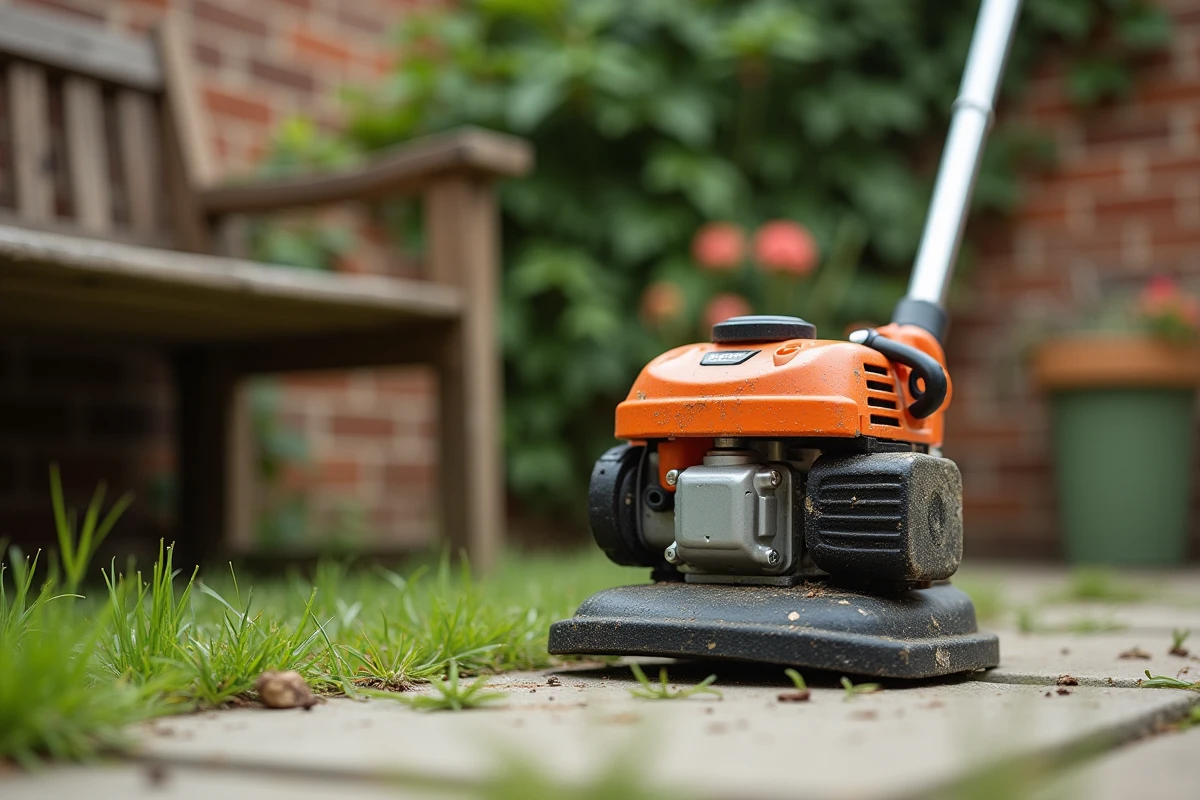
Aftermarket silent kits: adapting your thermal string trimmer to noise restrictions
Several municipalities and intercommunalities have tightened their regulations on noise pollution related to powered gardening tools, particularly in dense residential areas. Replacing a functioning device for this sole reason makes no economic sense.
Aftermarket silencer kits exist for most common 2-stroke engines. They attach to the original exhaust and noticeably lower the noise level without altering cutting power. The principle relies on adding additional expansion chambers that slow down and cool the gases before they exit.
Points to consider before installation
- Check the kit’s compatibility with the diameter and type of attachment of your model’s exhaust, as there is no universal standard among manufacturers.
- Ensure that the silencer does not create excessive back pressure, which would increase engine temperature and accelerate clutch wear, a common issue on entry-level thermal models.
- Keep the kit’s manual and proof of purchase: in case of inspection or neighbor complaints, an approved silencer proves your compliance efforts.
On 4-stroke engines, the base noise level is already lower, and adding an aftermarket silencer is generally unnecessary to meet current municipal noise regulations.
Clutch and reliability: the failure point to watch on a thermal string trimmer
Consolidated feedback from specialized forums after the 2025 season points to a recurring issue: accelerated wear of the centrifugal clutch on cheap thermal models. After just one season of intensive use, the linings wear down to the point of causing permanent slipping, rendering the cutting head inoperative.
This phenomenon mainly affects devices whose clutch is made of low-quality composite materials. Mid-range and high-end models use linings made of aramid fibers or sintered metal, which are much more resistant to heat and abrasion.
How to assess clutch quality before purchase
Technical sheets rarely mention the type of clutch lining. Two indirect indicators can help filter models:
- The manufacturer’s warranty on the engine unit: a warranty of two years or more on the clutch indicates the manufacturer’s confidence in the durability of the part.
- The weight of the engine unit, which partly reflects the density of the internal components. An abnormally light engine for its displacement suggests compromises on materials.
- The availability of spare parts: a manufacturer that sells the clutch separately anticipates replacement, which is a good sign of transparency.

Cutting width and line head: choose according to vegetation
The cutting width determines the area covered with each pass. Thermal models generally offer wider cutting heads than electric ones, which reduces working time on large plots.
For classic borders along paths or flower beds, an average width is sufficient. Overgrown areas or fence edges invaded by tall grasses require a wider head, paired with a thicker line. Round line is suitable for soft grass, while serrated or star-shaped line cuts woody stems more effectively.
The quick-load head, present on most recent models, avoids disassembling the casing to replace the line. This ergonomic detail saves time during extended sessions. Some devices also accept a plastic knife rotor as a replacement for the line spool, a useful option for very dense grasses but requiring slower work near hard surfaces to avoid projectiles.
Weight and ergonomics of a thermal string trimmer
A thermal engine adds weight to the tool compared to a battery model. The carrying harness then becomes a crucial element of comfort. Double-shoulder harnesses distribute the load across both shoulders and the hips, reducing fatigue during uses exceeding twenty minutes.
The position of the engine (at the top or bottom of the shaft) affects the overall balance. An engine positioned high brings the center of gravity closer to the body and facilitates lateral sweeping movements. Height and angle adjustable handles allow adapting the grip to the user’s size.
Choosing a thermal string trimmer comes down to three concrete trade-offs: the type of engine according to local regulatory constraints, the quality of the clutch for durability, and the cutting width suited to the actual vegetation of the terrain. A EU Stage V compliant model with an aramid fiber clutch and a quick-load head covers the vast majority of gardening uses without unpleasant surprises in the second season.