A well-designed workspace is not just a luxury, but a necessity to boost productivity and well-being. Trends in office furniture reflect an evolution towards environments that encourage both efficiency and creativity. More than just a simple assembly of desks and chairs, this furniture embodies a philosophy where harmony between humans and their workspace becomes paramount. Ergonomics, aesthetics, and functionality are not abstract terms here, but concrete elements that influence the daily lives of professionals.
The essential elements of office furniture
To design an effective workspace, it is essential to rely on elements that ensure comfort and practicality on a daily basis.
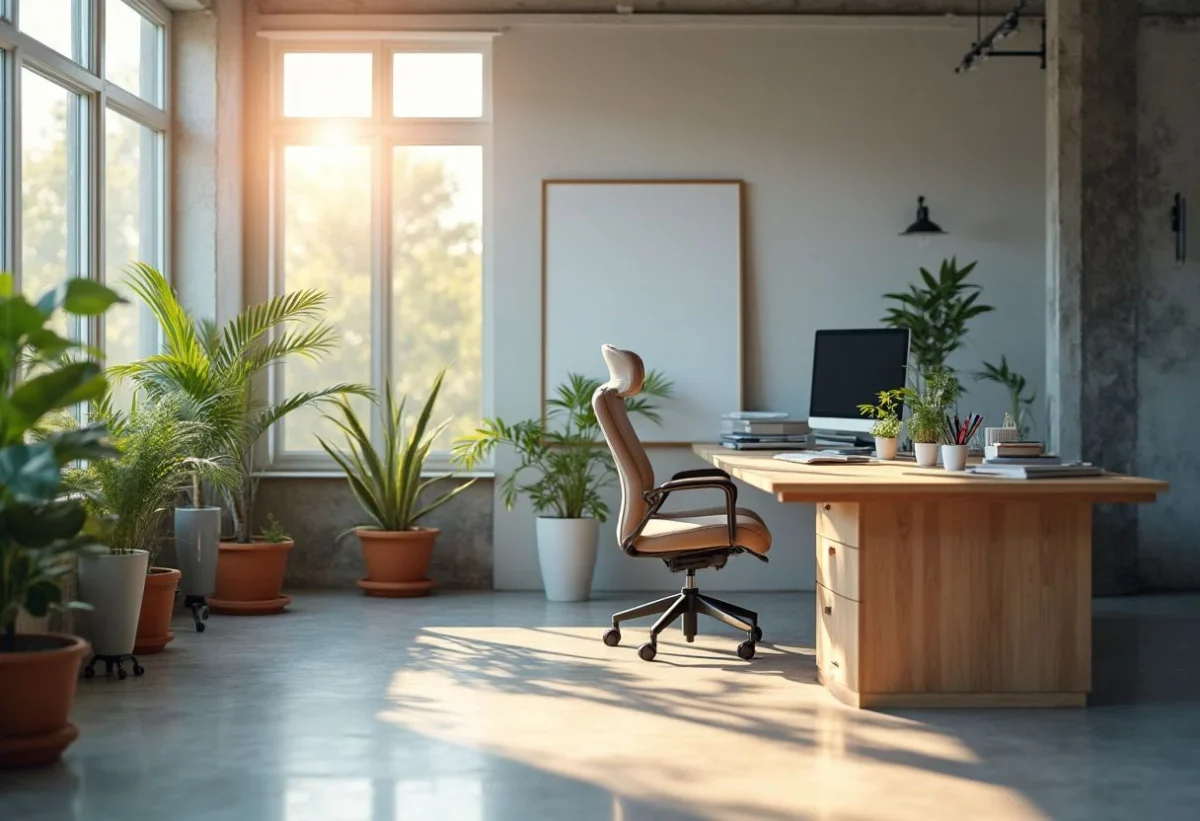
Ergonomic desks are an integral part of this setup, offering work surfaces tailored to individual needs while considering health standards. Office chairs, with designs that support the spine, prevent back pain. Good lighting, often overlooked, is also fundamental, as it reduces eye strain. Clever storage solutions, whether shelves or drawers, help maintain order, an undeniable ally of efficiency. Finally, a touch of greenery, even if it’s just a potted plant, enhances the atmosphere and has a positive impact on team morale.
Preferred materials
The choice of materials influences not only aesthetics but also the durability and maintenance of the furniture.
- Wood remains a classic choice, appreciated for its warmth and sturdiness. It can be solid or engineered, thus adapting to various budgets.
- Metal is often used for structures, providing both lightness and strength.
- For a modern touch, glass is favored in contemporary offices, bringing an impression of light and space.
- Finally, recycled materials, which reflect an ecological consciousness, are gaining popularity, becoming a preferred choice for companies concerned about their environmental footprint.
Collaborative workspaces
With the rise of teamwork, office furniture is evolving to promote collaboration. The design of these spaces is becoming a major issue for companies.
Open meeting rooms are appealing for their ability to host dynamic exchanges without the constraints of a rigid layout. Modular desks, equipped with movable partitions, allow for quick reconfiguration, adapting the space to immediate needs. In a relaxation corner, comfortable sofas and coffee tables encourage creativity and informal brainstorming. The integration of technology, with connections for electronic devices and interactive screens, transforms these places into platforms for communication and sharing.
Design as an identity factor
The design of office furniture goes beyond mere utility to become a true vector of brand image.
A sleek and modern design can convey an image of innovation and cutting-edge. Conversely, more traditional and elegant choices can reflect a certain stability and grounding in classic values. The use of colors plays a significant role, with some shades promoting calmness, while others stimulate energy and concentration. Every element of the furniture, from the choice of materials to the style of the pieces, contributes to creating a unique atmosphere, in line with the values and spirit of the company.
Carefully considering the layout and choice of furniture in an office space can transform not only the workplace but also the attitude and motivation of the teams that operate within it. By investing in ergonomic, aesthetic, and functional solutions, companies not only improve working conditions but also strengthen their corporate culture and attract talent. Far more than just a work setting, a well-thought-out office space is an invitation to innovation and productivity.