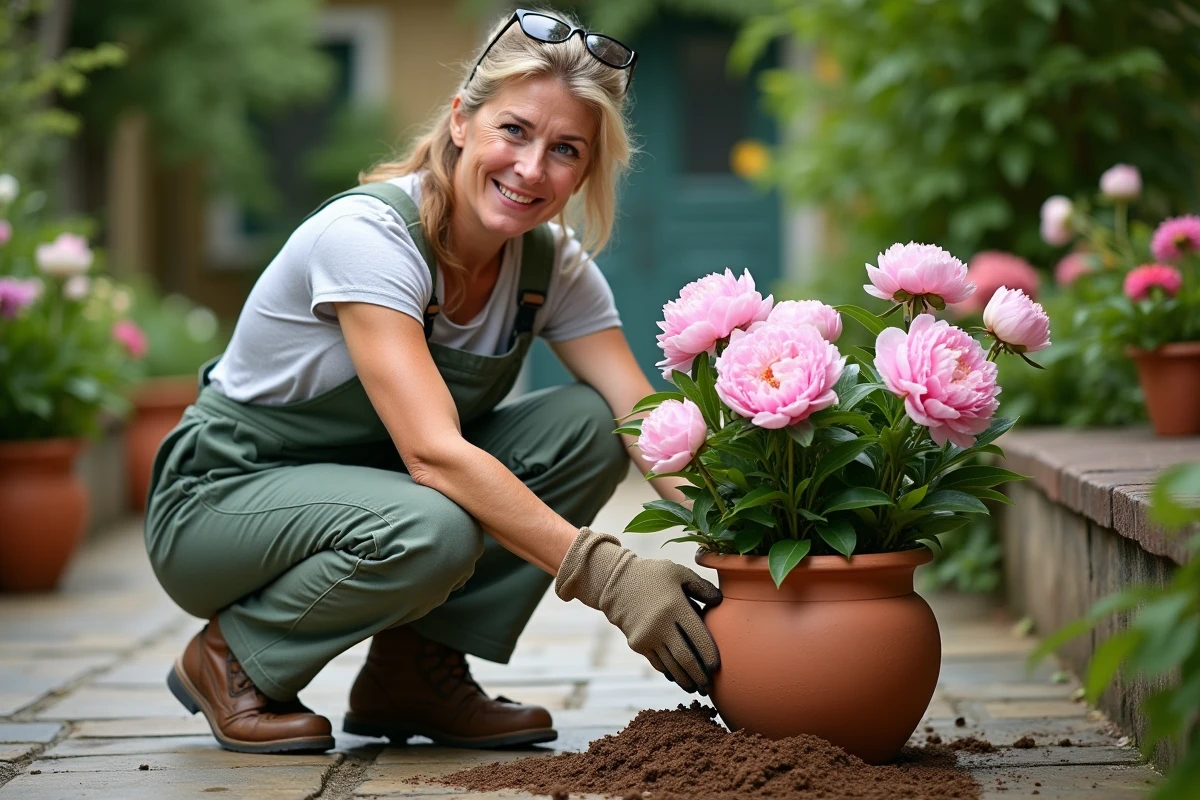
The Lidl-branded horse manure bag has little in common with the steaming pile from a countryside stable: the difference is quickly felt in the texture, color, straw proportion, and how the organic matter integrates into the potting soil. This contrast has already been noted by pot peony enthusiasts, sometimes to their detriment. Too compact and poorly distributed, industrial manure can slow the growth of demanding plants and weaken young roots.
However, when used methodically, this same product can transform the blooming and vigor of container-grown peonies. It all depends on a few precise actions: preparation, application, dosage. Recommendations exist to harness its benefits without destabilizing the soil or risking damage to the plants’ crowns.
Why Lidl horse manure appeals to gardeners concerned about their peonies’ health
The success of Lidl horse manure for pot peonies is no coincidence. Experts in Paeonia lactiflora know that to achieve dynamic peonies, one must rely on a living, rich, and balanced substrate. The bagged manure offers well-decomposed organic matter and nutrients suited for the delicate pot culture. When mixed with standard potting soil, it improves aeration, prevents the substrate from compacting too quickly, and stimulates beneficial bacterial activity around the roots.
Choosing organic fertilizer over chemical is also opting for a healthy, living soil. Microbial biodiversity develops, flowering becomes more regular, and peonies become more resilient. Those who practice this method observe that well-matured horse manure acts as a true starter for growth, especially in pots where the nutrient reserve depletes quickly.
A few simple rules help maximize its virtues: integrate the manure into the soil in autumn or just before the spring restart, allowing nutrients time to blend into the mix. A light mulch of well-composted manure protects the crown from temperature fluctuations and limits evaporation. In practice, a thin layer and a bit of vigilance are all that’s needed: the manure must not touch the buds. This technique, widely adopted by enthusiasts, allows for a balance of soil respect and spectacular blooms.
What actions to take to prepare and apply manure on pot peonies without risk
To give your peonies the best chance, the preparation of horse manure should not be improvised. Using fresh compost exposes the roots to burns or a lack of oxygen. Therefore, prioritize well-decomposed manure, free from any pathogens. A stabilized substrate promotes gradual nutrient absorption, without the drawbacks of strong odors or unwanted fermentations.
Before applying it, aerate the surface of your potting soil with a light rake. Then, lay down a very thin layer of manure, no more than one centimeter. Always maintain a safety distance from the stems and buds: this reflex limits the risk of rot and encourages peony recovery. Moderate watering completes the operation, ensuring an even distribution of nutrients throughout the substrate.
To enhance these effects, it is wise to add a light mulch on top: wood chips, dead leaves, or even well-dried wood shavings. This cover protects moisture, limits the appearance of unwanted weeds, and serves as a refuge for beneficial microfauna.
Here are the steps to follow for a successful application:
- Prepare the horse manure: always go through a composting phase.
- Apply to aerated soil: avoid any application on compacted or asphyxiated substrate.
- Respect distances: never place manure against the collar or young shoots.
- Complete with light watering: this action facilitates nutrient distribution.
Adopting this routine throughout the seasons gives your peonies a solid foundation to withstand challenges and produce generous bouquets. The results become tangible over time, without risking an imbalance in the pot’s ecosystem.
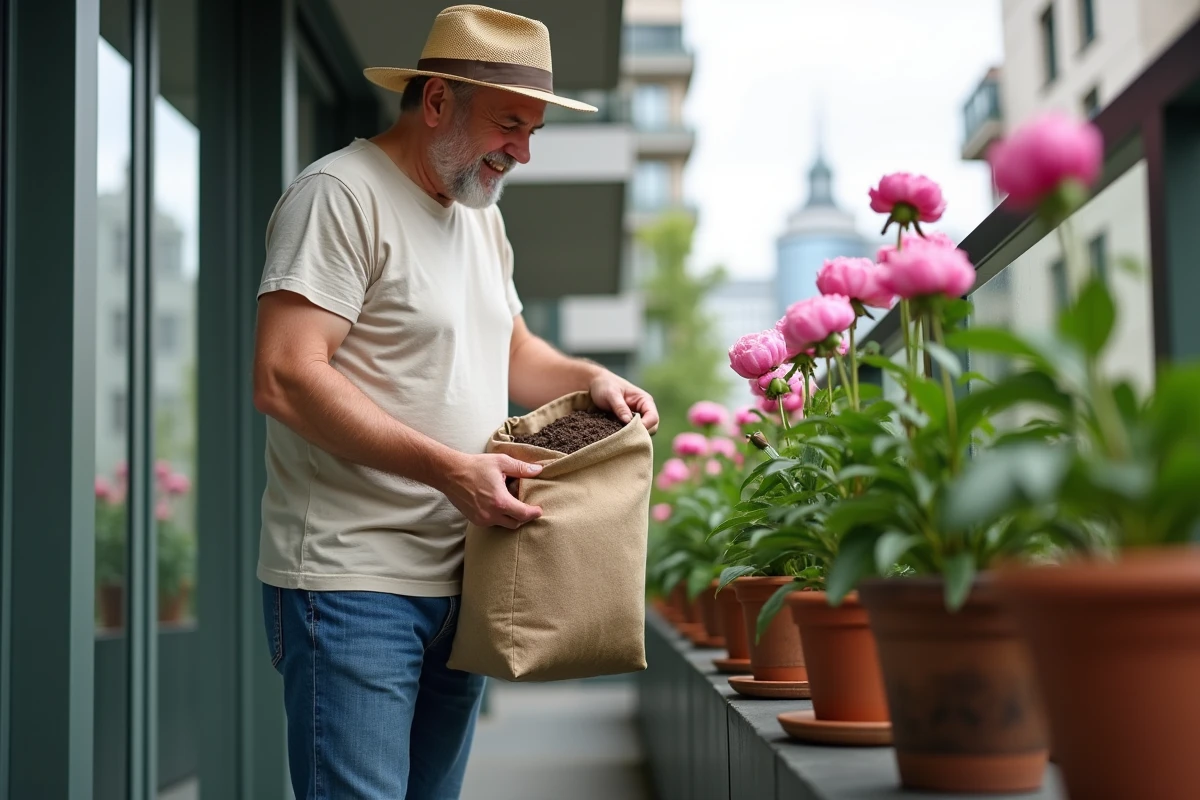
Vibrant peonies and an environmentally friendly garden: the results to expect
With regular applications of horse manure, transformation comes quickly: sturdy stems, deep-colored flowers, petals smooth as silk. But the impact goes beyond what is visible. Beneath the surface, a thriving life is at work: earthworms, microorganisms, and bacteria decompose organic matter, gradually releasing minerals and aerating the substrate. This underground work strengthens the roots and limits the spread of diseases.
In clay soil, horse manure reduces compaction and facilitates more uniform drainage. In sandy substrate, it improves water retention and protects against drying out. With each new season, the organic matter not only nourishes the peonies but also supports all container crops, whether vegetables or fruit trees, maintaining an ecological balance conducive to biodiversity.
Enhancing soil protection with complementary mulching also encourages microfauna, limits competition from weeds, and stabilizes substrate temperature. Many gardeners then notice that they can drastically reduce the use of phytosanitary products.
The concrete benefits of this method can be summarized as follows:
- Vigorous peonies, prolonged and regular flowering
- Living substrate, populated with useful microorganisms
- Vegetable gardens and ornamental gardens that gain abundance year after year
Horse manure is not just for peonies. Vegetables, fruit trees, and potted flowers all benefit from this natural fertilization. Discreet yet remarkably effective, it stands out as the ally of those who want to combine garden beauty with respect for life. When flowering is in full swing, it is impossible not to notice this new vitality: the difference is striking, season after season.